Material tradeoff dialogue
The dialogue below is a way to ask better questions about yarns, fibers, protective textiles, and carbon fiber reinforcements. It does not assign a recycled-content percentage, a responsible-sourcing certificate, or an end-of-use route to Teijin materials. Those points stay open until a document names the holder, the product, and the date.
Aramid and other performance fibers
Review touch, moisture response, and care only in the use that actually applies. An aramid fiber chosen for heat or cut exposure is not selected because it feels like a natural apparel fiber, and it should not be ranked against cotton or wool on an environmental scorecard that this site does not hold. Ask how the fiber is supplied, how the fabric is finished, and which maintenance the protective article will see. Strength and heat behavior can matter more than dry hand, while a softer handle can matter when the cloth sits against skin. Those priorities are allowed to conflict.
If a natural fiber appears in the same program, keep it in its own brief. Moisture absorption, drying, and care instructions for that fiber do not transfer to an aramid construction. Do not describe either side as absolutely cleaner or permanently protective. The useful comparison is which property the application needs, and which specimen can be reviewed for that property.
Carbon fiber as a separate grade
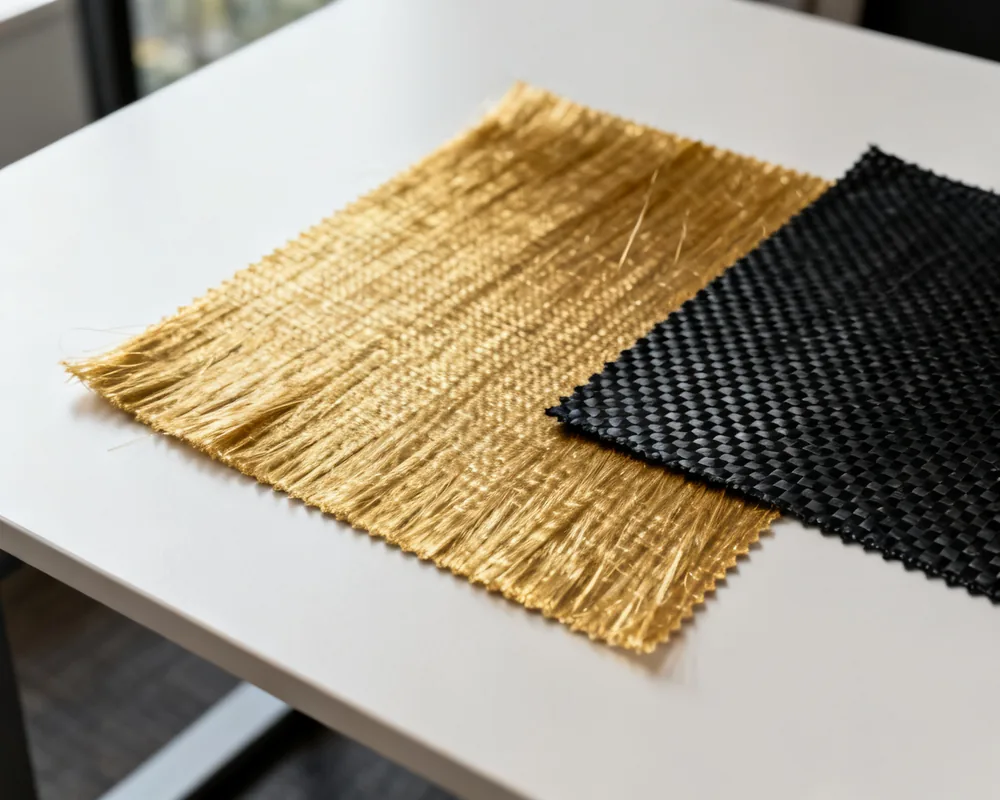
Review strength, stiffness intent, and processing in the form you have: tow, fabric, or prepreg. Carbon fiber is not an aramid substitute with a darker color. Drying, resin uptake, and consolidation are process questions. They are not proof of a recovery route, and they are not a reason to copy a protective-fabric heat claim onto a reinforcement grade.
A prepreg adds a resin boundary that a dry fabric does not have. Any later note about reuse, scrap, or end of use has to name that boundary. If the route is unknown, the honest entry is that the route is unknown. A design wish for circular use becomes a claim only when an applicable source covers the actual construction, including blends, coatings, and resin.
Avoid a single environmental ranking
| Dimension |
Question |
| Material source |
What fiber input is declared, and is the note about aramid, carbon fiber, or another family? |
| Processing |
Which spinning, weaving, coating, or prepreg steps are inside the statement? |
| Use and care |
What maintenance, heat, or mechanical duty is expected in service? |
| End-of-use route |
What recovery or disposal route is actually documented for this construction? |
Read each row as a question to carry into an inquiry. A material-level sentence does not establish a finished-product environmental result, and a fiber brand name does not establish that this website holds a chain-of-custody certificate. When a document is available, check the named entity, the product coverage, the scheme version, and whether the supply-chain stage matches the order you are discussing.